

Strategy · 8 min
Calls to Action for High-Ticket Services People Actually Take
A high-ticket service is not an impulse buy. Nobody scrolls past a button, gets a sudden rush of blood to the head, and commits to a serious financial decision on the spot.
A high-ticket service is not an impulse buy. Nobody scrolls past a button, gets a sudden rush of blood to the head, and commits to a serious financial decision on the spot. That is exactly why most calls to action for high ticket services flop. They ask for commitment before the visitor has any reason to believe the outcome is real, the process is clear, or the person behind the offer is worth trusting.
The button is rarely the problem. The offer sitting behind the button usually is. Here is how to build both so people actually take the next step.
Why a High-Ticket CTA Behaves Differently
A low-ticket CTA leans on momentum. If the price is small, the risk is small, and a friendly nudge is often enough. A high-ticket CTA is doing something harder. It has to reduce perceived risk, make the outcome feel concrete, and give the buyer a way to move forward without feeling like they just signed a blank check.
That means the call to action is not the button. It is the full offer plus the sequence around it. CTA strategy writing tends to land on the same guidance: make your calls to action friendly and inviting, keep your site fully transparent, and offer multiple calls to action rather than a single pressure point. For a service that costs real money, that transparency is not a nice extra. It is the thing that makes the ask believable.
Build the Offer Before You Write the Button
Before you touch the CTA copy, answer four questions in plain language. What happens right after someone clicks? How long does that step take? Does it cost anything, and if so, what? What does the person walk away with either way?
If you cannot answer those in a single clean sentence, your visitor cannot either, and no amount of clever button text will fix it. A CTA that says "Book a call" while leaving the price, length, and agenda a mystery is asking for trust you have not earned yet. A CTA that says "Book a 20-minute fit call, no pitch, you leave with a scope and a clear next step" is doing actual work. Same button. Different offer.
Pre-Pitch the Call Before It Happens
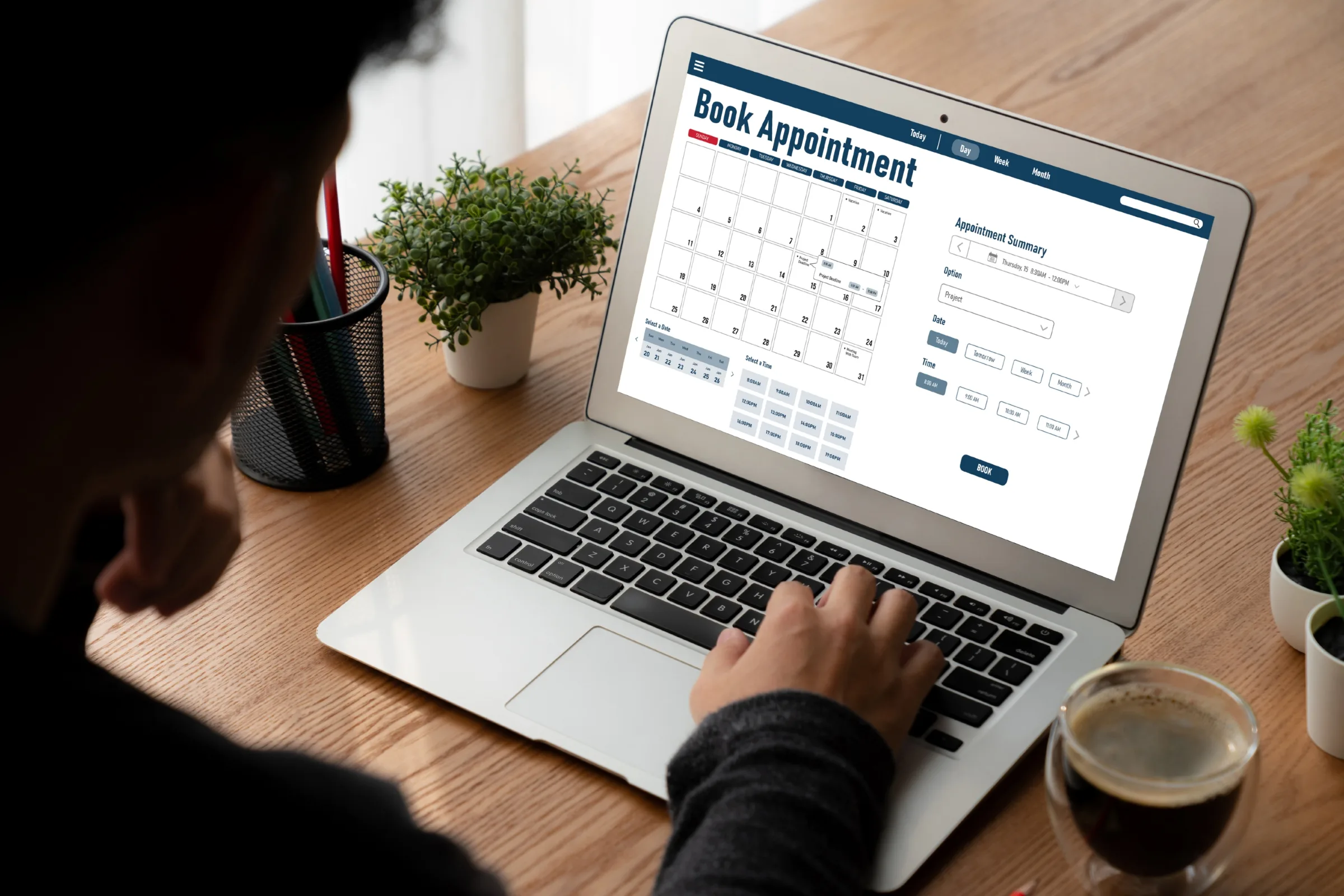
High-ticket sales calls live or die on what the buyer expects going in. The pre-pitch matters more than the pitch itself, and your CTA copy is the earliest place to deliver it. Tell people what the call is, who it is for, and who it is not for.
Name the call something honest instead of vague. Fit call. Scope call. Strategy session. Then say what it is not: not a demo, not a five-minute pitch, not a trap. Naming the shape of the conversation removes the fear that drives so many no-shows. It also filters out people who were never a match, which is a win for your calendar, not a loss for your pipeline.
CTA Wording That Carries Weight Without Shouting
There is a reason CTA page titles keep leaning on words like free, offer, gift, guarantee, and discount. Those words signal value and remove friction. On a high-ticket service, though, they need care. "Discount" and "free" can quietly reposition you as a bargain, which is the opposite of what a premium offer needs. "Offer" and "guarantee" tend to hold up better because they promise something concrete rather than something cheap.
Swap flat button labels for specific ones that describe the step:
Book a fit call
Request a scope and quote
See the process and what it includes
Get the audit before you commit
Send me the details and I will reply with next steps
Every one of those tells the reader what happens next. "Learn more" tells them nothing and quietly wastes your best placement.
Give People More Than One Door
A single CTA on a high-ticket page forces every visitor into the same temperature of commitment. Some people want to talk today. Some want to read the process twice, compare options, and email you a question at 11pm. Push all of them at one button and the middle group drifts away.
Offer a primary path and a lower-friction secondary path. Both should be visible, both should be honest, and neither should pretend to be something it is not.
CTA typeBest forWhat it should promiseBook a fit callBuyers ready to talk specificsA clear agenda, a time estimate, no pressureRequest a scope and quoteBuyers who need numbers before committingA written response with what is includedGet the process page or auditEarly-stage researchersUseful information with no obligationEmail a questionPeople who dislike callsA real reply from a real person
Sell the Value, Not the Discount
Attracting high-ticket clients without leaning on discounts is a well-worn conversation for a reason. Discounting teaches buyers to wait for the next markdown, and it quietly tells them your stated price was never real. Value framing does the opposite. Show the result, then show the return the result creates. A line like "let me show you how we get you results and even multiply the return" is doing more selling than any percentage off ever will.
If your offer needs a discount to close, the offer is usually underbuilt somewhere earlier in the page. Fix the clarity and the proof instead of the price.
Not Every High-Ticket Sale Needs a Call
Plenty of high-ticket deals close without a sales call at all. That matters if you are an introvert, if you sell to buyers in other time zones, or if your service is well-defined enough to explain in writing. A page that lays out the process, the deliverables, and the next step clearly can carry a buyer most of the way to a yes.
For those buyers, add an async path: a detailed request form, an application, or a written proposal intake. Do not force a calendar link on someone who would rather read than talk. You are not lowering your standards by offering a second route. You are removing a bottleneck.
Where the CTA Belongs on a Service Page
Placement is part of the offer. A few reliable spots:
Directly under the opening promise, once the reader knows what you do
Immediately after the section that explains what is included
After proof, meaning results, case notes, or testimonials
At the end of the FAQ, where objections have just been handled
Repeat the same primary CTA at those points rather than inventing a new ask each time. Repetition builds familiarity. A moving target just confuses people.

Mistakes That Quietly Kill High-Ticket CTAs
Most of these are easy to spot once you know what you are looking for. A vague label like "Submit" or "Learn more." A CTA that does not match the page it sits on, so a reader expecting pricing lands on a call booking form. Zero explanation of what happens after clicking. One path only. And the classic: fake urgency on a service that has no real deadline. High-ticket buyers are usually careful people. Manufactured pressure reads as a warning sign, not a reason to hurry.
Hiding your process or scope entirely is a mistake too. Transparency is part of what makes a friendly, inviting CTA work in the first place.
Test the Offer, Not Just the Button
Changing button color is cheap entertainment. Change the offer wording instead. Test a CTA that names the call agenda against one that does not. Test a written quote request against a calendar link. Test a CTA that states the time commitment against one that leaves it vague.
Watch what happens after the click as closely as the click itself. A CTA that gets plenty of taps and produces a calendar full of no-shows is not working. It is just loud.
Frequently Asked Questions
What should a high-ticket CTA actually say?
Name the next step in plain language and say what the person gets from it. "Book a fit call" beats "Submit." Add the time commitment and what happens afterward if you can fit it in one line. Specific labels tell a careful buyer this is a real process with real boundaries, which lowers the risk of clicking.
Should I show pricing on a high-ticket service page?
Full transparency is the safer default. You do not have to publish a number if your projects vary, but you should explain how pricing works, what drives it up or down, and what the next step looks like. A page that explains its pricing logic builds more trust than one that hides everything behind a form.
Do I need a sales call to close a high-ticket service?
No. Some buyers prefer to read, compare, and request a written scope. Offering an async path such as a detailed request form or written proposal intake removes a bottleneck for those people. Keep a call option available for buyers who want to talk it through, but do not make it the only door.
How many calls to action should a service page have?
One primary CTA repeated at natural stopping points, plus one lower-friction secondary option. That gives decisive buyers a clear path and gives researchers something to do that is not leaving. Multiple asks work as long as they point in the same direction and do not compete for the same attention.
Start with the offer, not the button. Make the next step concrete, name what it costs in time, give people a second route if they need one, and repeat the same ask at the points where a real decision gets made. Do that and your calls to action stop being decoration and start doing the job you hired them for.
Want this done for you?
Reading is the easy part. We do the rest.
Book a free 15-minute fit call. We look at your website together and you leave with two or three concrete fixes, whether you hire us or not.